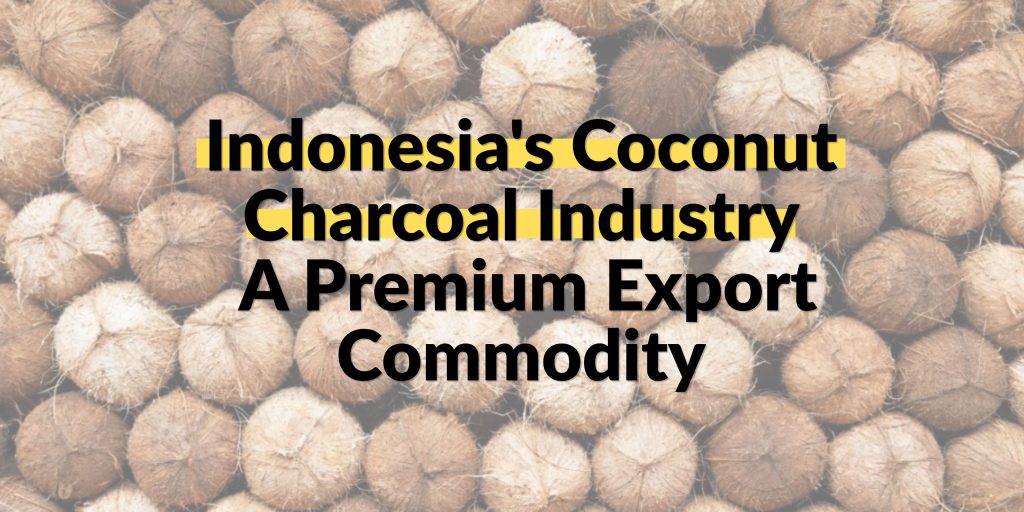

Indonesia produces around 18 billion coconuts per year, making it one of the world’s largest coconut producers. What was once considered agricultural waste, coconut shells, is now the raw material behind a fast-growing global export industry. Today, coconut charcoal briquettes from Indonesia are shipped to markets across the Middle East, Europe, and beyond.
From hookah lounges in Dubai to BBQ grills in Germany, Indonesian coconut charcoal has become a trusted, sustainable alternative to wood charcoal. Here is what importers and procurement specialists need to know. Today, buyers searching for a reliable coconut charcoal supplier Indonesia will find no shortage of options, but quality, consistency, and credibility remain the key factors that separate serious exporters from the rest.
Why Coconut Shell Charcoal Outperforms Wood Charcoal
Coconut shells left over from processing are carbonized in controlled kilns, producing a dense, low-ash carbon material with clear performance advantages:
- Higher calorific value: typically 7,000-8,000 kcal/kg, compared to 6,000-7,000 kcal/kg for wood charcoal
- Lower ash content: usually below 3%, which means less residue and easier cleanup
- Longer burn time: briquettes sustain consistent heat for 2-3 hours
- Minimal smoke and odor: especially important for indoor hookah use
- Sustainable sourcing: shells are agricultural byproducts, not sourced from forests
For hookah markets in the UAE, Saudi Arabia, Kuwait, and Bahrain, these qualities are a requirement. Buyers need charcoal that delivers clean, neutral heat without affecting the flavor of premium shisha tobacco. In Europe, particularly Germany, the Netherlands, and France, demand is driven by grilling culture and tightening regulations on deforestation-linked charcoal products.
Indonesia’s Position in the Global Market
Indonesia’s coconut supply comes from key provinces including Central Java, East Java, North Sulawesi, and Riau. This gives local manufacturers a structural cost advantage that few competing countries can match.
Indonesian producers have also moved well beyond raw shell charcoal. Companies like PT. Indonesia Growth Asia have played a significant role in professionalizing this trade, connecting Indonesian manufacturers directly with importers across the Middle East, Europe, and beyond. Here is what procurement specialists need to know before placing an order. The industry now exports finished briquettes in cube, hexagonal, finger, and flat-cut formats, each designed for specific end uses. This shift has allowed Indonesian coconut charcoal exporters to command higher prices while meeting the quality standards set by European importers and Gulf distributors.
Reputable exporters carry key certifications, including MSDS documentation, SGS-certified lab testing for ash and moisture levels, and food-grade compliance for BBQ and food service applications.
Market Demand: Middle East and Europe
Middle East
Hookah culture across Gulf Cooperation Council (GCC) countries creates consistent, year-round demand. Importers in the UAE, particularly through Jebel Ali Free Zone, regularly re-export Indonesian briquettes to Saudi Arabia, Qatar, Egypt, and Jordan. Volumes typically rise before Ramadan and during the summer social season. Key buyer priorities include fast-lighting cube briquettes, a neutral flavor profile, consistent shape and density, and retail-ready packaging.
Europe
The BBQ and grilling market in Germany, the Netherlands, Belgium, and Scandinavia continues to grow steadily. Consumers are increasingly willing to pay more for sustainably sourced charcoal, and Indonesian coconut briquettes carry a clear story: they come from agricultural waste, not virgin timber. The EU Deforestation Regulation (EUDR) is also putting pressure on wood-based charcoal producers, which creates a growing structural advantage for coconut shell alternatives.
What Buyers Should Look for in a Supplier
Experienced importers evaluate Indonesian coconut charcoal suppliers across several criteria:
- Product consistency: moisture content below 5%, fixed carbon above 75%, ash content below 3%
- Production capacity: ability to fulfill 20-40 foot container orders on a regular schedule
- Certifications: SGS or equivalent third-party testing, phytosanitary certificates, and correct HS code classification
- Packaging: moisture-resistant outer packaging suitable for sea freight
- Trade terms: most exporters work with L/C or T/T, with FOB Tanjung Priok or Surabaya as standard Incoterms
Most supplier relationships begin with a sample order, followed by a factory audit or third-party inspection, before moving to volume contracts.
A Sustainable Commodity With Long-Term Demand
The global demand for coconut charcoal continues to rise, driven by growth in the hookah industry, outdoor grilling markets, and increasing pressure on businesses to source sustainably. Indonesia remains the most reliable origin for consistent quality, competitive pricing, and scalable supply. For importers, distributors, and buyers looking to secure a long-term supply partner, now is the right time to explore what Indonesian coconut charcoal can offer your business.

